A considered shape
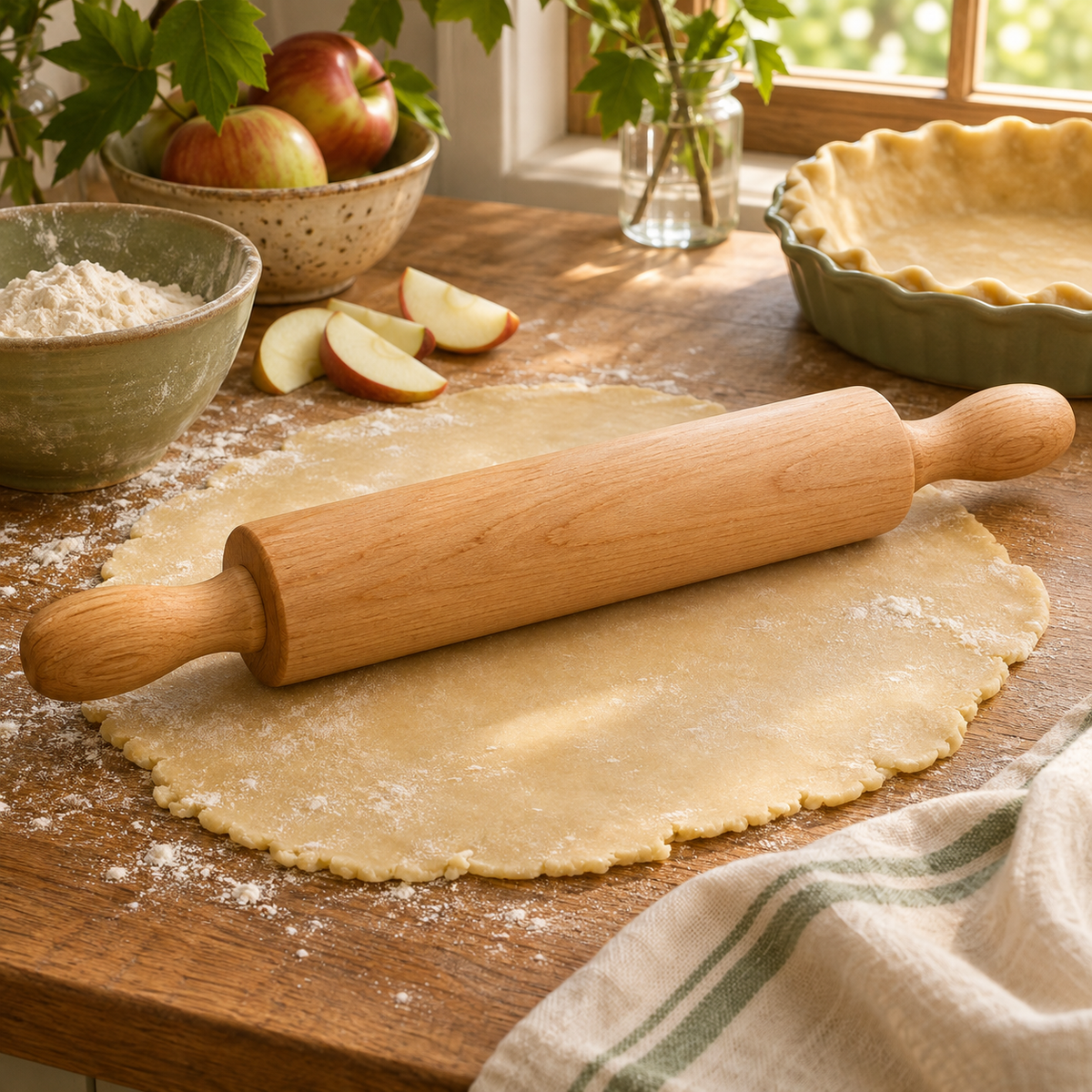
The extended cylindrical form provides a continuous rolling surface. Use it with a dough portion and workspace that suit the recipe you are following.
Maplewhimsy / The baking collection
$24.90 USD
Make space for a pastry project with a simple rolling pin. Its long, rounded form belongs at the centre of a clear work surface, ready for pie pastry, rolled cookies and the dough recipes you enjoy practising. Choose...
Available to order
A closer look / Your next baking moment
Make space for a pastry project with a simple rolling pin. Its long, rounded form belongs at the centre of a clear work surface, ready for pie pastry, rolled cookies and the dough recipes you enjoy practising.
Choose it for the part of the recipe you want to work on, then let your own pace and the recipe's method guide the session.
The extended cylindrical form provides a continuous rolling surface. Use it with a dough portion and workspace that suit the recipe you are following.
The straightforward profile lets you change hand position as you roll, helping you work across the dough rather than pressing into one small spot.
A warm, natural-looking finish gives the rolling pin an understated presence beside flour, pastry and the other tools on your table.
Follow the recipe's instructions for resting or chilling the dough. Clear the worktop and prepare the recommended surface before placing the dough down.
Begin at the centre and roll outward with controlled pressure. Turn or check the dough as appropriate so you can notice sticking or uneven areas.
Check the thickness using the method your recipe recommends. Transfer or cut the dough carefully, gathering offcuts only as your recipe allows.
Bring it out for an afternoon pie, a tray of rolled cookies or a first attempt at a new pastry recipe. The useful starting point is the method and thickness the recipe requests, rather than a universal rolling routine.
Set out the ingredients and tools before beginning, and leave a clear place for the next stage. Working through one familiar recipe is a useful way to learn how a tool feels in your own kitchen.
More for your countertop